Talking about The Big Picture
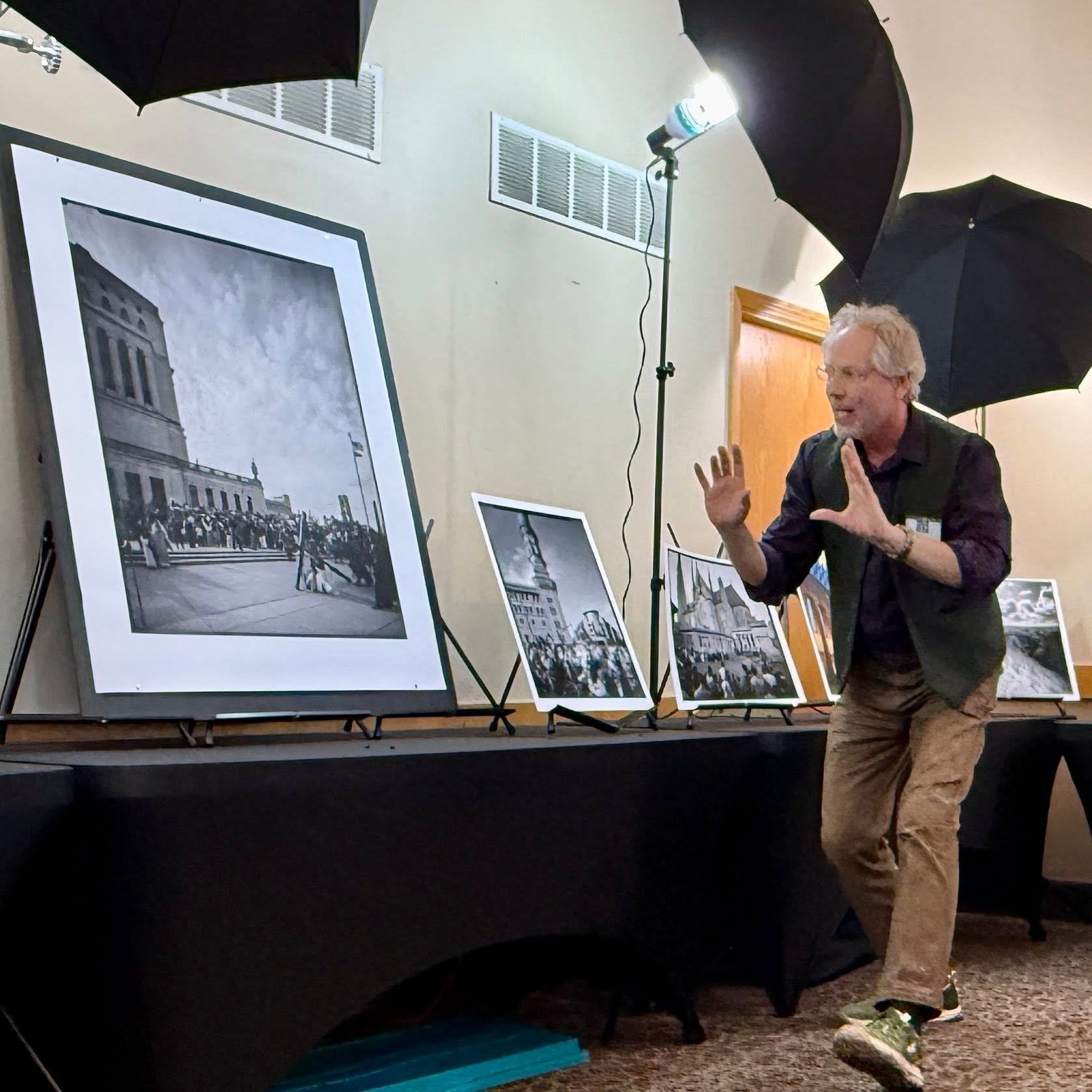
Back in May, I had the chance to share some recent Cirkut camera work at the Midwest Large Format Asylum’s (MWLFA) 19th annual Inspiration Weekend. I’m a little late in getting this posted, but I wanted to make a record of the talk and the weekend before it slipped too far into the background.
The talk is an informal audience recording, but it gives a useful look at where this project stands right now: working with a 1921 No. 10 Cirkut camera, making long panoramic negatives on expired and aerial roll film, and contact printing them by hand as Van Dyke brown prints. I talked a bit about how the camera works, how this particular camera came to me, and why the Ohio and Muskingum River landscapes have become such natural subjects for it.
You can view the talk below. A big thank you to Denis Kelly for recording it.
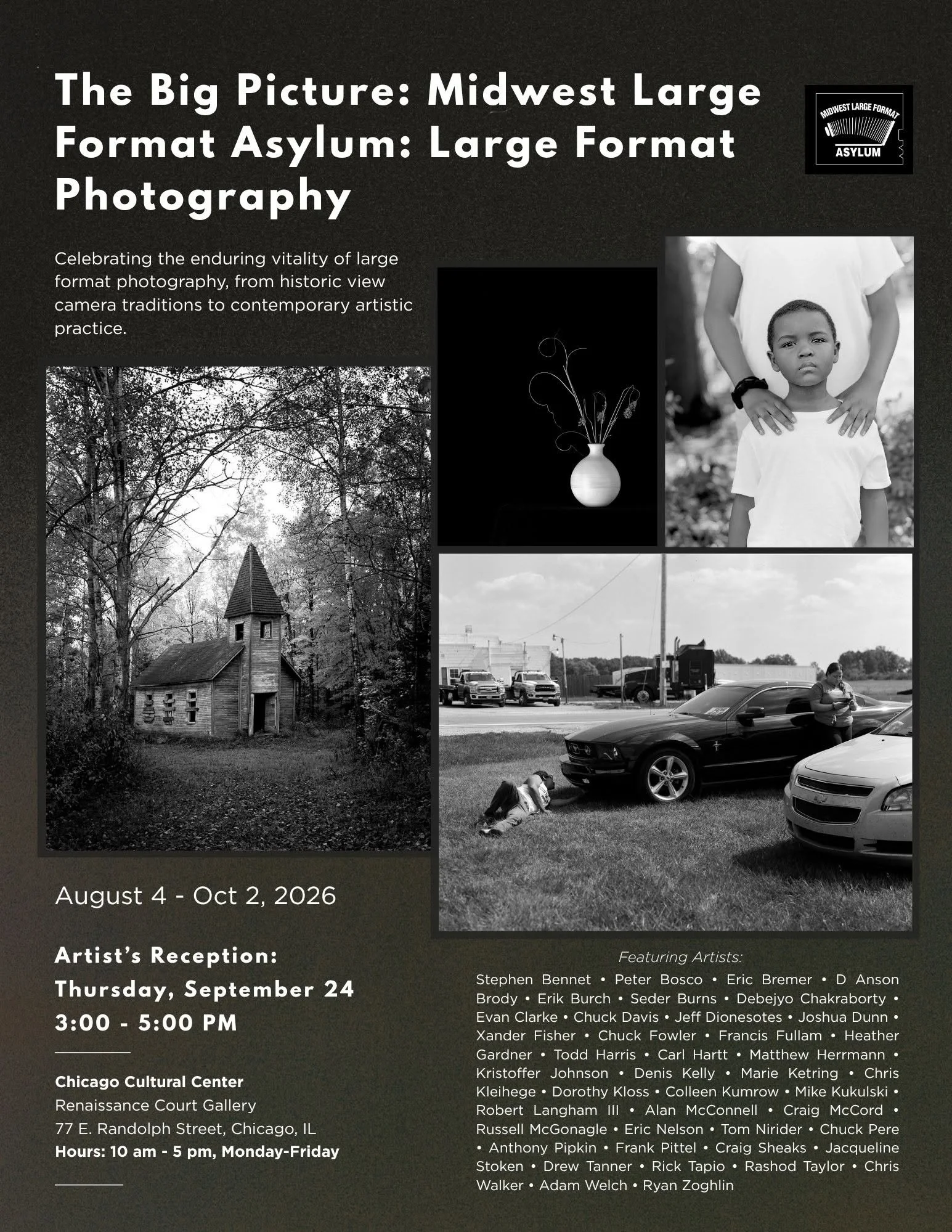
The weekend was also an opportunity to drop off two of my prints that will be among 60 featured in The Big Picture, a juried exhibit hosted by MWLFA at the Chicago Cultural Center’s Renaissance Gallery. I’m grateful to be part of this exhibit alongside so many photographers making thoughtful, distinctive work. If you’re in Chicago between August 4 and October 2, be sure to check it out. I’ll be there for a talk with some of the photographers on August 20 and again on September 24 for the opening reception during Filter Photo Festival. You can view the full schedule of events associated with the exhibit on the MWLFA website.
Friday afternoon and evening included a range of presentations: Eric Nelson on the history of wet-plate photography, Doug Hanson on making ground glass for a camera back, Ken Hough on Deardorff camera history, Rick Tapio on the work of obscure photographers, and Carl Hartt on the “why” of photography through the motivations of several well-known photographers.
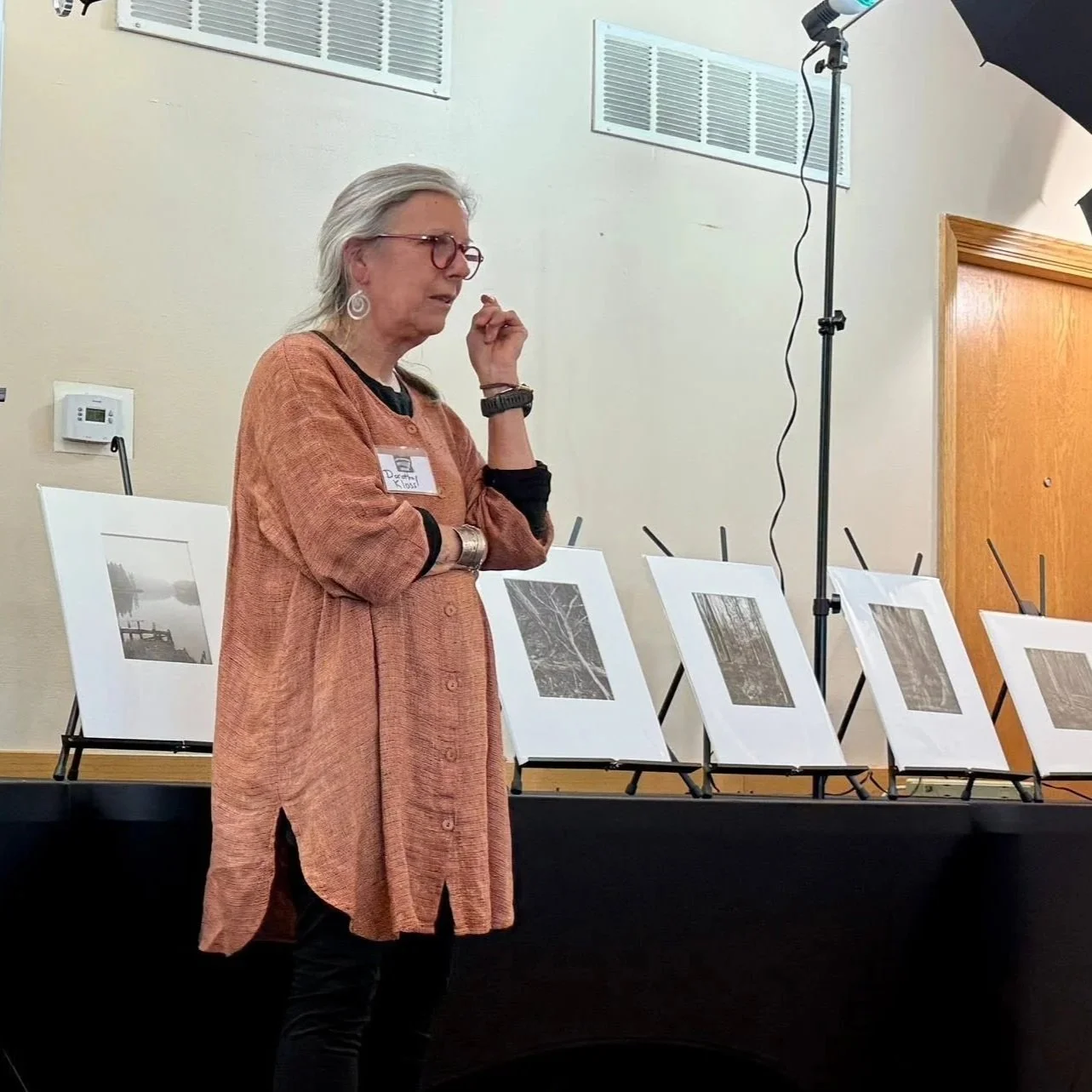
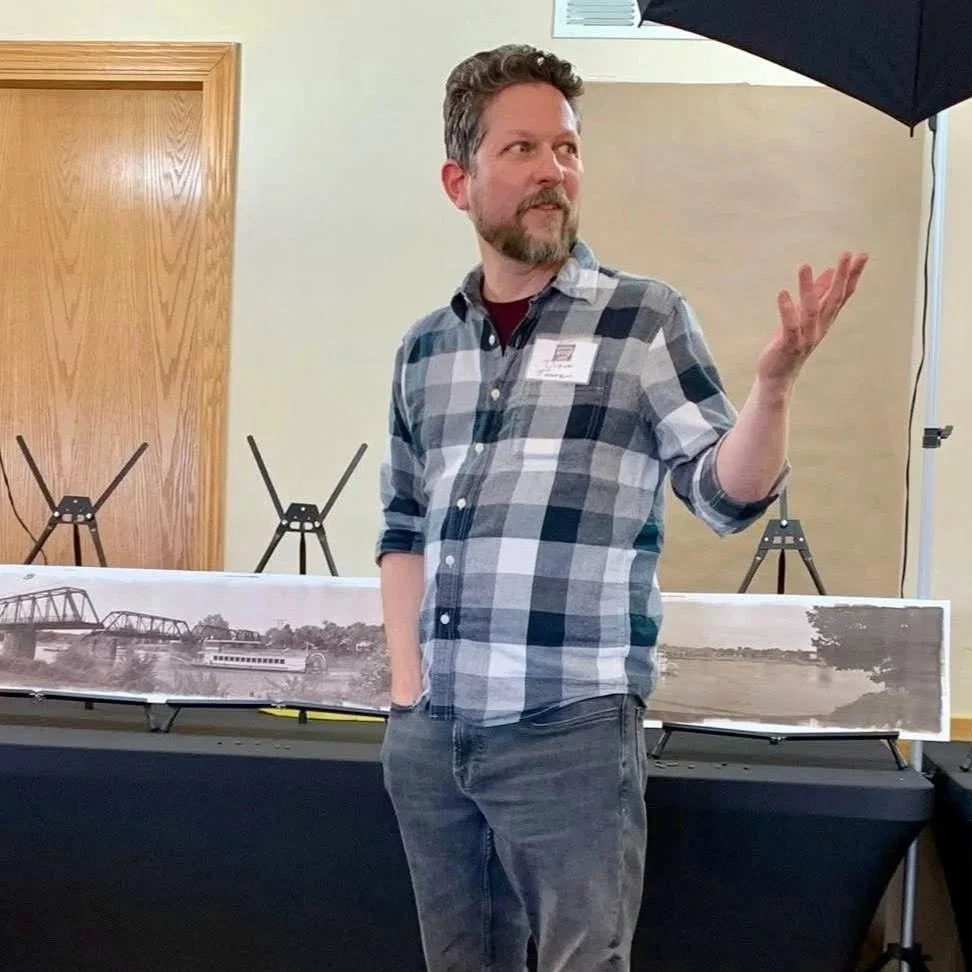
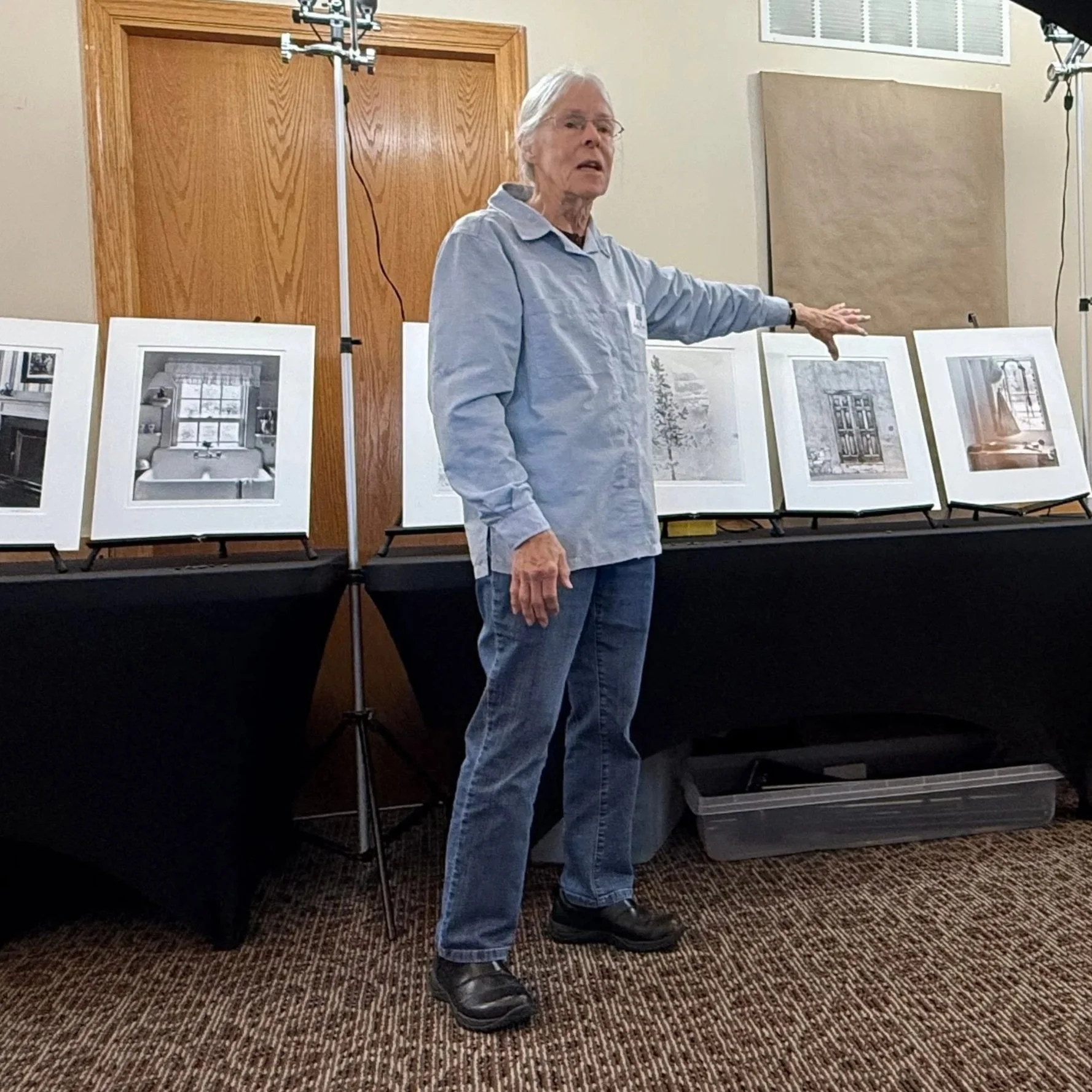
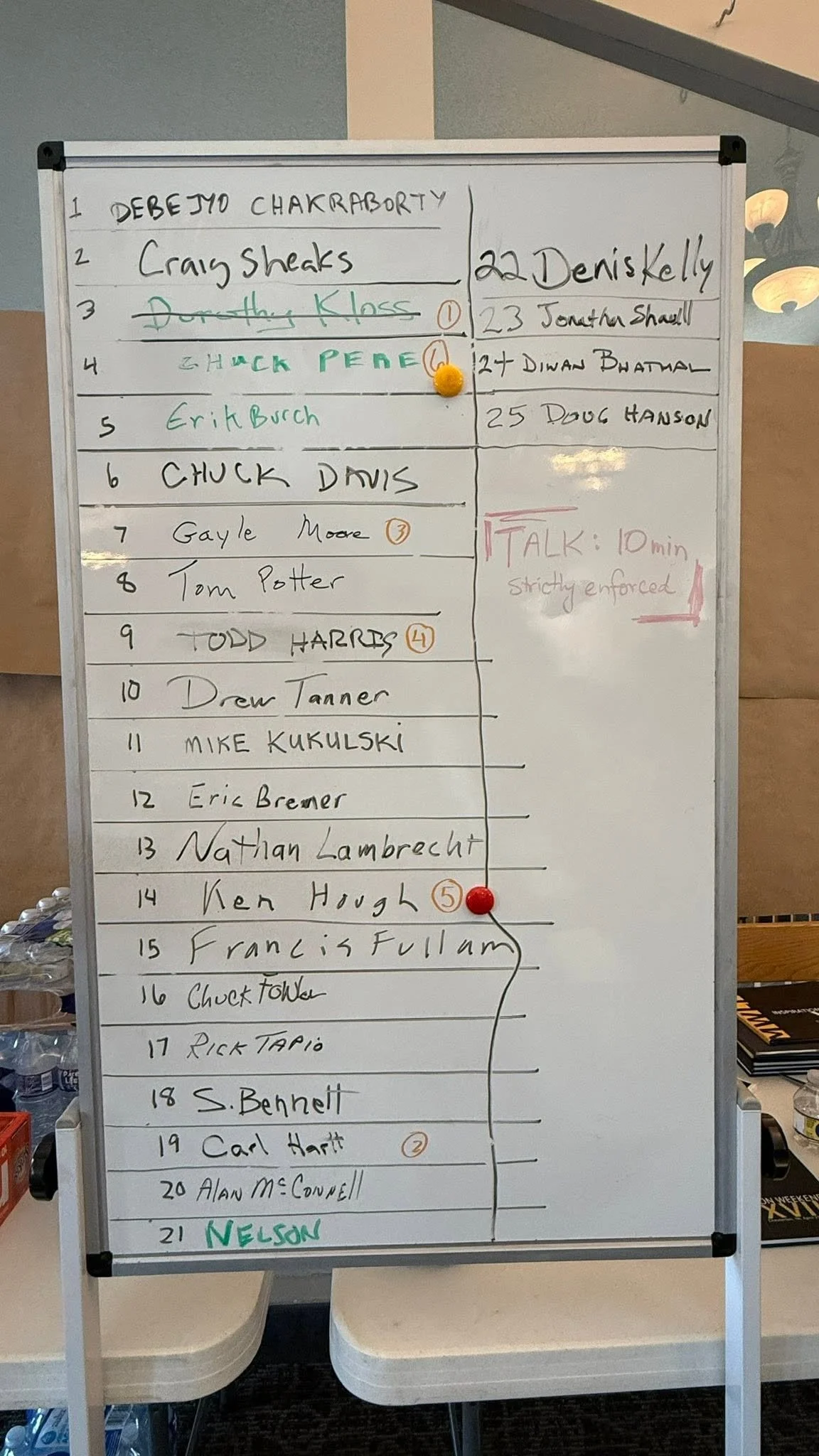
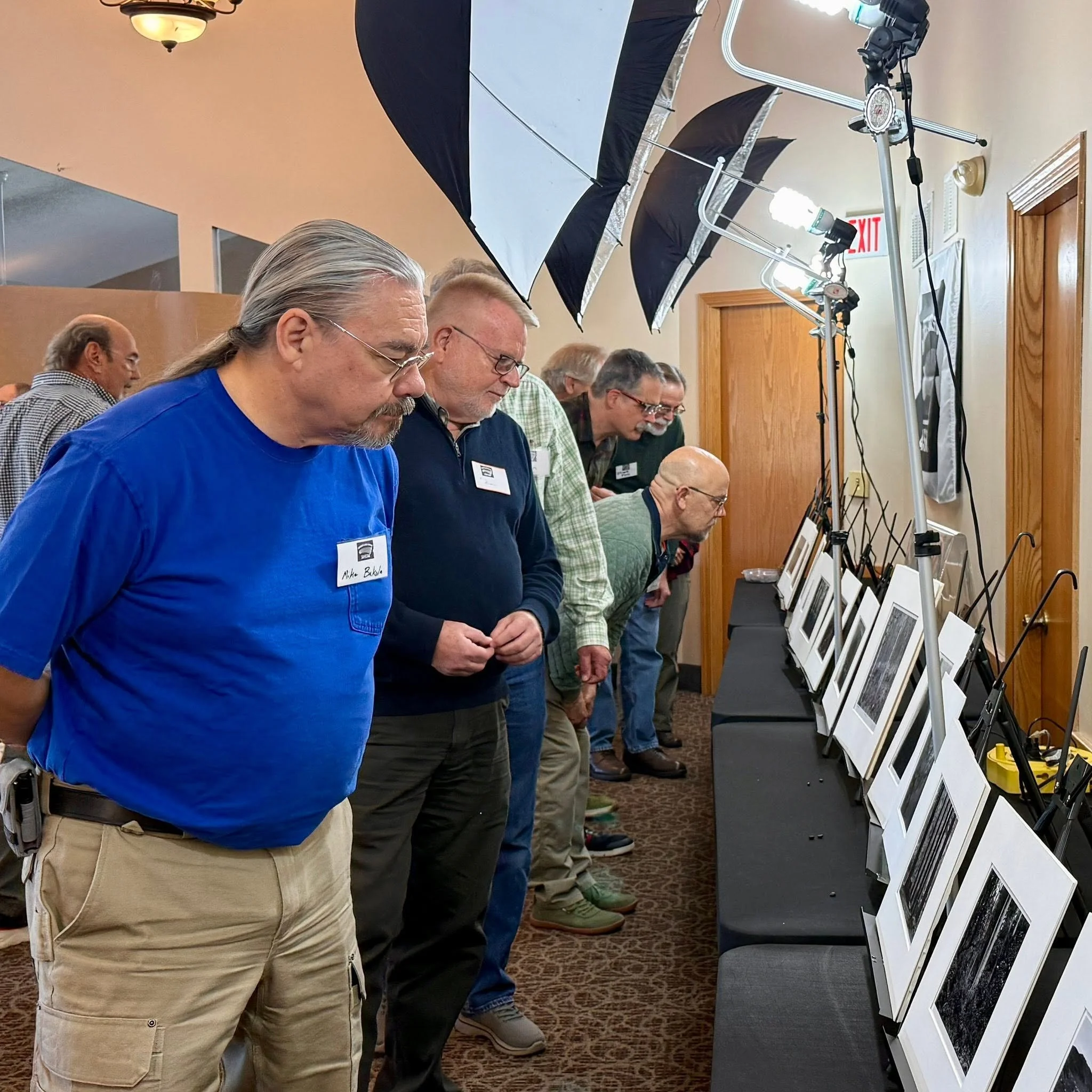
The main event started Saturday morning around 8:30 with 25 individuals presenting their portfolios. The only requirement was that all images began with a large format film camera. When it was your turn, you displayed your images on the provided easels and tables, and everyone came through to look at the work. Each photographer then had 10–15 minutes for a short question-and-answer talk.
It was inspiring to see such a diverse range of work in one place, from traditional gelatin silver prints to tintypes, platinum/palladium, gum bichromate, cyanotype, calotype, and more.
I’ve often been in creative spaces where I’ve felt like a bit of an outsider, but this weekend I was welcomed warmly from the start. It was a joy to spend the weekend with so many genuinely enthusiastic, supportive, creative, and curious photographers.
I came away with several new friends and plenty of inspiration.